


Note: This material was originally prepared in Azerbaijani. This English version was translated using artificial intelligence. The authoritative version is the Azerbaijani version.
In reports published by Azerbaijani media about the parliamentary elections held in Armenia on June 7, 2026, it is claimed that Western institutions turned a blind eye to electoral violations.
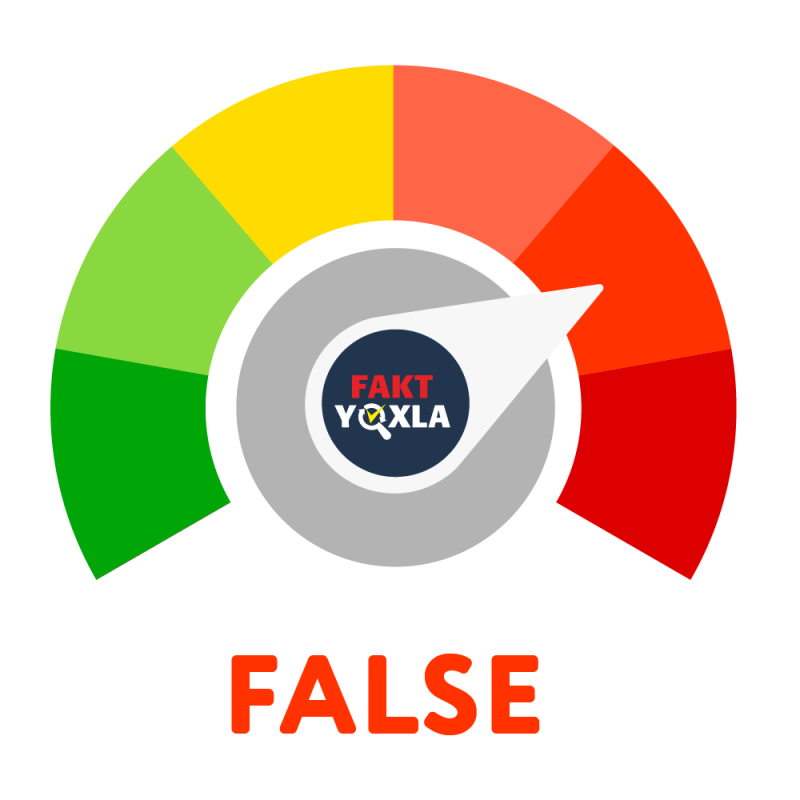
According to Fakt Yoxla’s conclusion, the claim is false.
Report by Western Institutions on the Elections Held in Armenia
The main Western institutions that observed the parliamentary elections held in Armenia were the OSCE Office for Democratic Institutions and Human Rights (ODIHR), the OSCE Parliamentary Assembly, the Parliamentary Assembly of the Council of Europe, and the European Parliament. Although the OSCE has not yet published its final report on the elections, it released its report on preliminary observations and conclusions one day after the election. At the end of the published report, it is noted that the report is the result of the joint work of the above-mentioned institutions. In other words, the views expressed in the report reflect the common position of those institutions.
A review of the report shows that, contrary to the claims of Azerbaijani media outlets, there are quite critical remarks regarding violations that occurred during the elections. For example:
- The opening of criminal cases against opposition candidates over allegations of vote-buying and other electoral violations discouraged opposition voters from actively participating in the campaigns (page 1);
- The coercion of public-sector employees and ordinary citizens to attend events in favour of the ruling party raises concerns about equal opportunities in election campaigning (pages 1 and 2);
- Insufficient oversight of campaign financing limited transparency for public scrutiny (page 1);
- The recommendations of the OSCE and the Venice Commission were not implemented (page 1);
- International standards regarding candidate registration were not applied (page 2);
- Investigations into vote-buying and other electoral violations were mostly carried out against opposition candidates (page 2);
- Public Television carried out more campaigning in favour of the ruling party (page 3);
- Recently, international human rights organisations have stated that there has been a deterioration in the state of fundamental human rights in Armenia and have expressed concern over issues such as the decline of judicial independence and the widespread use of pretrial detention (page 5).
As can be seen, Western organisations did not remain silent regarding violations and negative developments that occurred during the elections held in Armenia.
In addition, the CIS, of which Azerbaijan is also a member, also observed the elections in Armenia. The organisation assessed the election process positively and did not issue any negative opinion.
Election Process and Results
The elections held in Armenia on June 7 are considered one of the most significant elections in the country’s history. The contest between the pro-Western candidate and current Prime Minister Nikol Pashinyan and pro-Russian opposition candidates Samvel Karapetyan, Robert Kocharyan, and Gagik Tsarukyan was regarded by the international community as an election that would determine Armenia’s future political trajectory. Moreover, since one of the main issues on the election campaign agenda was the future relations between Armenia and Azerbaijan, the elections took place in a highly competitive environment.
According to official statements, the Civil Contract Party, led by Prime Minister Nikol Pashinyan, won the elections with 49.74 per cent of the vote. Its main rivals, the Strong Armenia Party and the Armenia Alliance Party, received 23.27 per cent and 9.9 per cent of the vote, respectively.
The Civil Contract Party won 64 seats in parliament, Strong Armenia won 29 seats, and the Armenia Alliance won 12 seats.
Thus, the claim that Western institutions turned a blind eye to violations that occurred during the elections held in Armenia is false.